
Welcome
At San Luis Obispo County SELPA, we are here to bring you special education expertise throughout our county.
ABOUT SELPA
Discover our mission, who we are, and what we do.
PARENT RESOURCES
Explore information and resources supporting students with disabilities.
GOVERNANCE
Review our agendas, plans, manuals and agreements.
SLO SELPA CAC
Learn about our Community Advisory Committee.
Our Story
Thank you for visiting the San Luis Obispo County Special Education Local Plan Area (SLO County SELPA) website.
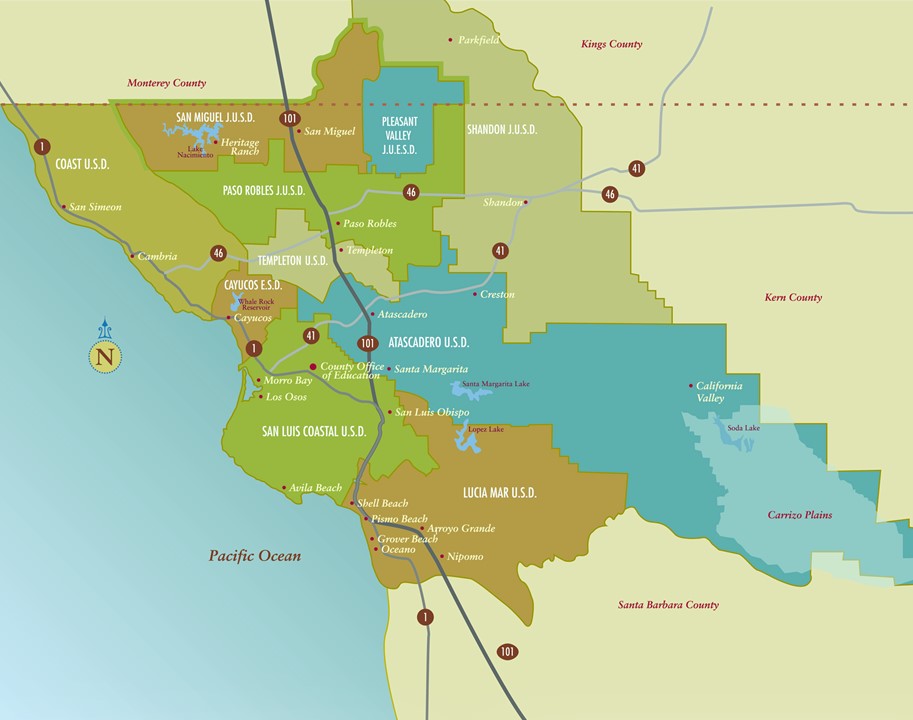
SLO County SELPA has been serving school districts, community partners, and families since 1977. At SLO County SELPA, we are committed to supporting high quality special education programs and services. We collaborate with 11 local education agencies (LEAs) and 3 charter schools for the benefit of students with disabilities, their families, and the staff who teach and support them. Our inspiration is the belief that every child should have the opportunity to achieve his or her full potential!
We invite you to explore our website to learn more about our services, programs, and supports. It is a privilege to serve San Luis Obispo County. Please contact us if you have any questions.